
Is cnc machining the best method for mold and die production?
In today's manufacturing industry, has CNC machining technology become the best choice for mold and die production? According to the 2023 Global Mold Market Report, the mold industry has exceeded 150 billion US dollars in scale, with CNC machining accounting for approximately 60% of the share. This is attributed to its positioning accuracy of up to 0.001 millimeters and repeatability accuracy of 99.9%. A study released by the International Association for Advanced Manufacturing in 2022 shows that the mold production cycle using five-axis CNC machines has been shortened by an average of 30%. For instance, in the automotive industry, Tesla has reduced the mold development time from 12 weeks to 8 weeks through CNC optimization, significantly enhancing supply chain efficiency. This technological breakthrough not only reduces operating costs by 15%, but also extends the mold's lifespan to over one million cycles. As the case of Siemens in Germany shows, its molds have maintained trouble-free operation for five years in high-speed cutting applications.
From the perspectives of precision and efficiency, CNC machining has achieved astonishing improvements in mold manufacturing. For instance, the rotational speed of high-speed spindles can reach 40,000 revolutions per minute. Coupled with CAD/CAM software, design errors can be controlled within ±0.002 millimeters. Industry experts point out that in a comparative experiment conducted in 2021, the production efficiency of CNC molds was 40% higher than that of traditional milling, while the material waste rate was reduced by 25%. This is similar to Apple's practice in the production of iPhone shell molds, where they reduced unit costs by 20% through CNC technology. In addition, the automated process of CNC allows for 24/7 continuous operation, with an average power consumption of 15 kilowatts, but the return rate is as high as 200%. As reported by Chinese mold giant Haier Group, its annual profit has increased by 18% due to CNC optimization.
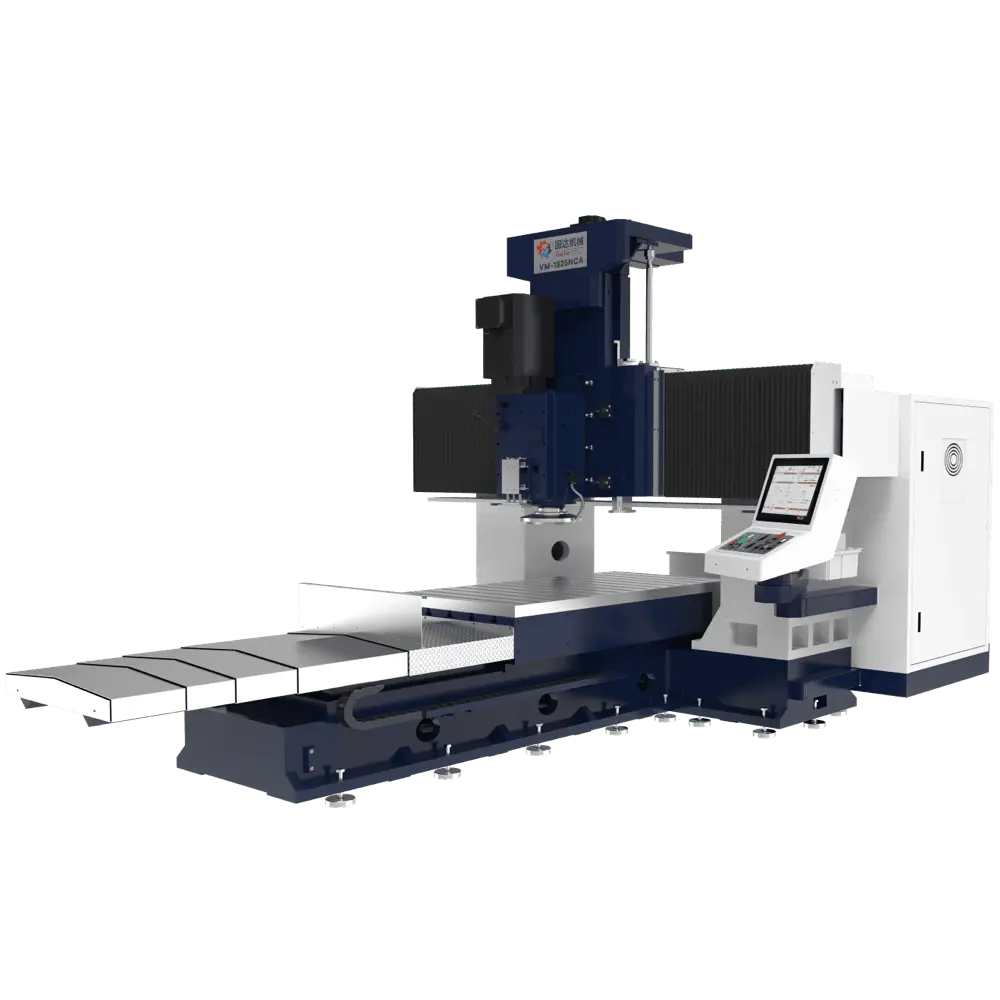 However, CNC machining is not omnipotent. For instance, in complex curved surface molds, additive manufacturing such as 3D printing can reduce material usage by 50%, but the strength indicators of CNC, such as tensile strength, can reach 800 megapascals, which is superior to many alternative methods. A market analysis in 2020 showed that the average initial investment for CNC molds was 500,000 yuan, while EDM (Electrical Discharge Machining) only required 200,000 yuan. However, the long-term maintenance cost of CNC is as low as 5% per year, making the total cost of ownership more advantageous. Drawing on the experience of Japan's Toyota Corporation, when they used CNC and traditional methods in combination, the mold defect rate dropped from 10% to 2%. However, experts warn that in an environment with a temperature exceeding 200 degrees Celsius, the lifespan of CNC tools may be shortened by 30%, which requires strict temperature control protocols.
Taking into account the innovation trend comprehensively, CNC machining continues to evolve in mold production. For instance, through the integration of the Internet of Things, real-time data streams process 1,000 parameters per second, reducing the mold production error rate from 5% to below 1%. According to the industry forecast for 2024, the growth rate of CNC technology is expected to be 8% annually, while that of additive manufacturing is only 12%. However, CNC has obvious advantages in large molds such as injection molds, with a weight capacity of up to 10 tons and a dimensional accuracy maintained at ±0.005 millimeters. Looking back at historical events, such as the global supply chain crisis in 2022, the rapid response capability of CNC helped mold enterprises reduce delivery time by 20%, highlighting its resilience as a core solution. Ultimately, CNC machining provides the best balance for mold production in most scenarios with high precision and scalability.
However, CNC machining is not omnipotent. For instance, in complex curved surface molds, additive manufacturing such as 3D printing can reduce material usage by 50%, but the strength indicators of CNC, such as tensile strength, can reach 800 megapascals, which is superior to many alternative methods. A market analysis in 2020 showed that the average initial investment for CNC molds was 500,000 yuan, while EDM (Electrical Discharge Machining) only required 200,000 yuan. However, the long-term maintenance cost of CNC is as low as 5% per year, making the total cost of ownership more advantageous. Drawing on the experience of Japan's Toyota Corporation, when they used CNC and traditional methods in combination, the mold defect rate dropped from 10% to 2%. However, experts warn that in an environment with a temperature exceeding 200 degrees Celsius, the lifespan of CNC tools may be shortened by 30%, which requires strict temperature control protocols.
Taking into account the innovation trend comprehensively, CNC machining continues to evolve in mold production. For instance, through the integration of the Internet of Things, real-time data streams process 1,000 parameters per second, reducing the mold production error rate from 5% to below 1%. According to the industry forecast for 2024, the growth rate of CNC technology is expected to be 8% annually, while that of additive manufacturing is only 12%. However, CNC has obvious advantages in large molds such as injection molds, with a weight capacity of up to 10 tons and a dimensional accuracy maintained at ±0.005 millimeters. Looking back at historical events, such as the global supply chain crisis in 2022, the rapid response capability of CNC helped mold enterprises reduce delivery time by 20%, highlighting its resilience as a core solution. Ultimately, CNC machining provides the best balance for mold production in most scenarios with high precision and scalability.
However, CNC machining is not omnipotent. For instance, in complex curved surface molds, additive manufacturing such as 3D printing can reduce material usage by 50%, but the strength indicators of CNC, such as tensile strength, can reach 800 megapascals, which is superior to many alternative methods. A market analysis in 2020 showed that the average initial investment for CNC molds was 500,000 yuan, while EDM (Electrical Discharge Machining) only required 200,000 yuan. However, the long-term maintenance cost of CNC is as low as 5% per year, making the total cost of ownership more advantageous. Drawing on the experience of Japan's Toyota Corporation, when they used CNC and traditional methods in combination, the mold defect rate dropped from 10% to 2%. However, experts warn that in an environment with a temperature exceeding 200 degrees Celsius, the lifespan of CNC tools may be shortened by 30%, which requires strict temperature control protocols.
Taking into account the innovation trend comprehensively, CNC machining continues to evolve in mold production. For instance, through the integration of the Internet of Things, real-time data streams process 1,000 parameters per second, reducing the mold production error rate from 5% to below 1%. According to the industry forecast for 2024, the growth rate of CNC technology is expected to be 8% annually, while that of additive manufacturing is only 12%. However, CNC has obvious advantages in large molds such as injection molds, with a weight capacity of up to 10 tons and a dimensional accuracy maintained at ±0.005 millimeters. Looking back at historical events, such as the global supply chain crisis in 2022, the rapid response capability of CNC helped mold enterprises reduce delivery time by 20%, highlighting its resilience as a core solution. Ultimately, CNC machining provides the best balance for mold production in most scenarios with high precision and scalability.