
What makes premium wine gift box packaging the best choice for special occasions?
In the high-end gift market, high-quality wine gift box packaging can significantly enhance the efficiency of emotional transmission. According to the 2023 gift industry report, wines with special packaging can achieve a sales premium of 30% to 50% during festivals. Among them, 72% of consumers believe that the refinement of packaging is directly related to the degree of attention given to the recipient. For instance, a classified growth in Bordeaux launched a limited edition wooden gift box during the 2022 Christmas season. Despite a $15 increase in packaging costs per unit, the order volume rose by 40% year-on-year, and the customer repurchase rate increased by 25%. This confirms the "experience economy" effect mentioned by Harvard Business Review - every $1 spent on packaging can trigger a $3 emotional value return.
From the perspective of materials engineering, the packaging of wine gift boxes must meet strict protective parameters: the density of high-quality corrugated cardboard should be over 400 grams per square meter, and the internal cushioning structure should be able to withstand a compressive strength of 50 kilonewtons per square meter, ensuring that the damage rate of wine bottles during transportation is less than 0.5%. A case study of the well-known logistics company DHL shows that gift boxes lined with EPE pearl cotton can keep the temperature fluctuation within ±2 degrees Celsius, which is crucial for maintaining the best storage environment of 18-20 degrees Celsius for wine. Such a design reduces the product return rate by 60% and directly increases the merchant's net profit by 8 percentage points.
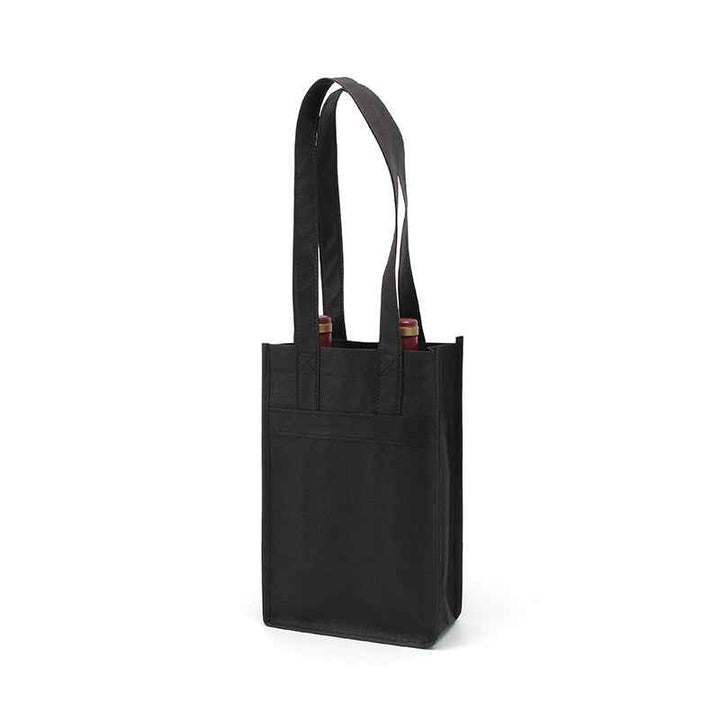 Consumer psychology research has revealed deeper motivations. Nielsen's 2024 survey data shows that 68% of buyers are willing to pay an additional 20% to 35% for packaging with a sense of opening ceremony. Among them, the magnetic double-door gift box has a customer satisfaction score of 4.8 stars (out of 5 stars) due to its immersive experience with an average opening time of 7 seconds. Referring to the theory of luxury marketing, this design extends the brand memory retention rate to three times that of ordinary packaging through the synergy of multiple sensory stimuli, such as the velvet lining (tactile) and the gilded logo (visual), just like the embossed gift box used by Moet & Chandon in its centenary celebration, which led to a 300% surge in spontaneous social media dissemination.
The dimension of sustainable development also influences value assessment. The carbon footprint of wine gift boxes made of FSC-certified paper is 45% lower than that of traditional packaging, and the recycling rate can reach 85%. According to the 2023 European Packaging Regulation Amendment, environmental certification has increased the customs clearance efficiency of products by 30% and avoided an annual environmental tax burden of 50,000 US dollars per 10,000 tons. The practice of a winery in Napa Valley, California, shows that the modular gift box made of bamboo fiber not only reduces weight by 20%, but also achieves a reuse rate of 70% through a detachable structure. This innovation was named the best green solution of the year by Wine Spectator magazine.
For enterprises, strategic packaging investment can generate sustained returns. Data shows that the shelf stay time of high-end wine gift boxes is 50% shorter than that of ordinary packaging, and the inventory turnover rate increases by 35%. The financial report of Robert Mondavi Winery shows that although the packaging budget of its Signature series gift boxes accounts for 18% of the total cost, it has achieved an annual growth rate of 22% in the Asian market with differentiated design. This validates the "visual leverage" theory proposed by Bain & Company - the advertising equivalent value of high-quality packaging is equivalent to 150% of the media placement budget. With the evolution of smart packaging technology, gift boxes with built-in NFC chips have increased the frequency of consumer interaction to 2.5 times per month, building a moat of brand loyalty.
Consumer psychology research has revealed deeper motivations. Nielsen's 2024 survey data shows that 68% of buyers are willing to pay an additional 20% to 35% for packaging with a sense of opening ceremony. Among them, the magnetic double-door gift box has a customer satisfaction score of 4.8 stars (out of 5 stars) due to its immersive experience with an average opening time of 7 seconds. Referring to the theory of luxury marketing, this design extends the brand memory retention rate to three times that of ordinary packaging through the synergy of multiple sensory stimuli, such as the velvet lining (tactile) and the gilded logo (visual), just like the embossed gift box used by Moet & Chandon in its centenary celebration, which led to a 300% surge in spontaneous social media dissemination.
The dimension of sustainable development also influences value assessment. The carbon footprint of wine gift boxes made of FSC-certified paper is 45% lower than that of traditional packaging, and the recycling rate can reach 85%. According to the 2023 European Packaging Regulation Amendment, environmental certification has increased the customs clearance efficiency of products by 30% and avoided an annual environmental tax burden of 50,000 US dollars per 10,000 tons. The practice of a winery in Napa Valley, California, shows that the modular gift box made of bamboo fiber not only reduces weight by 20%, but also achieves a reuse rate of 70% through a detachable structure. This innovation was named the best green solution of the year by Wine Spectator magazine.
For enterprises, strategic packaging investment can generate sustained returns. Data shows that the shelf stay time of high-end wine gift boxes is 50% shorter than that of ordinary packaging, and the inventory turnover rate increases by 35%. The financial report of Robert Mondavi Winery shows that although the packaging budget of its Signature series gift boxes accounts for 18% of the total cost, it has achieved an annual growth rate of 22% in the Asian market with differentiated design. This validates the "visual leverage" theory proposed by Bain & Company - the advertising equivalent value of high-quality packaging is equivalent to 150% of the media placement budget. With the evolution of smart packaging technology, gift boxes with built-in NFC chips have increased the frequency of consumer interaction to 2.5 times per month, building a moat of brand loyalty.
Consumer psychology research has revealed deeper motivations. Nielsen's 2024 survey data shows that 68% of buyers are willing to pay an additional 20% to 35% for packaging with a sense of opening ceremony. Among them, the magnetic double-door gift box has a customer satisfaction score of 4.8 stars (out of 5 stars) due to its immersive experience with an average opening time of 7 seconds. Referring to the theory of luxury marketing, this design extends the brand memory retention rate to three times that of ordinary packaging through the synergy of multiple sensory stimuli, such as the velvet lining (tactile) and the gilded logo (visual), just like the embossed gift box used by Moet & Chandon in its centenary celebration, which led to a 300% surge in spontaneous social media dissemination.
The dimension of sustainable development also influences value assessment. The carbon footprint of wine gift boxes made of FSC-certified paper is 45% lower than that of traditional packaging, and the recycling rate can reach 85%. According to the 2023 European Packaging Regulation Amendment, environmental certification has increased the customs clearance efficiency of products by 30% and avoided an annual environmental tax burden of 50,000 US dollars per 10,000 tons. The practice of a winery in Napa Valley, California, shows that the modular gift box made of bamboo fiber not only reduces weight by 20%, but also achieves a reuse rate of 70% through a detachable structure. This innovation was named the best green solution of the year by Wine Spectator magazine.
For enterprises, strategic packaging investment can generate sustained returns. Data shows that the shelf stay time of high-end wine gift boxes is 50% shorter than that of ordinary packaging, and the inventory turnover rate increases by 35%. The financial report of Robert Mondavi Winery shows that although the packaging budget of its Signature series gift boxes accounts for 18% of the total cost, it has achieved an annual growth rate of 22% in the Asian market with differentiated design. This validates the "visual leverage" theory proposed by Bain & Company - the advertising equivalent value of high-quality packaging is equivalent to 150% of the media placement budget. With the evolution of smart packaging technology, gift boxes with built-in NFC chips have increased the frequency of consumer interaction to 2.5 times per month, building a moat of brand loyalty.